
Facial Peel – AHA 30% + BHA 2% – Private Label Skincare UAE
Additional information
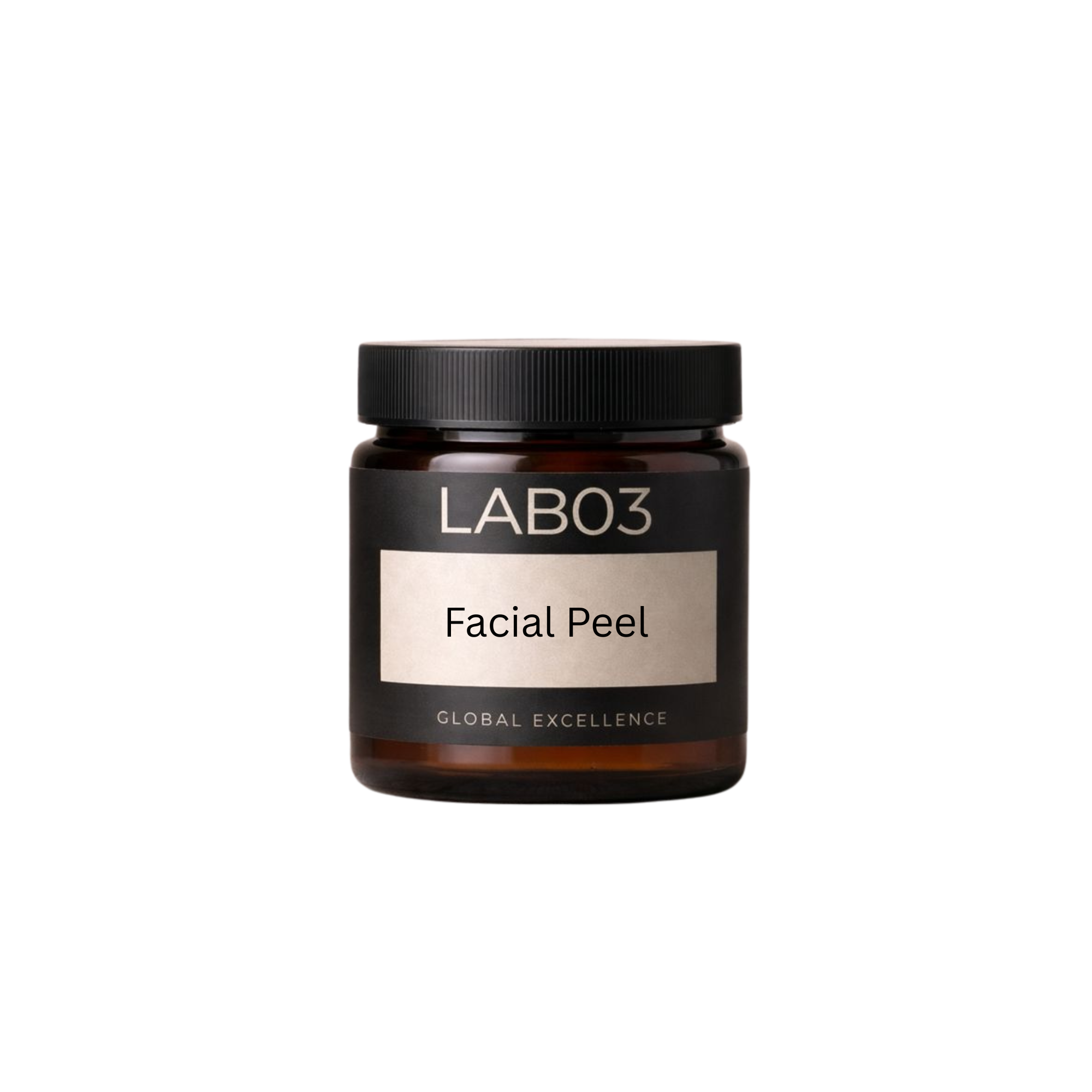
A professionally formulated multi-acid facial peel combining AHA 30% (glycolic, lactic, and mandelic acid blend) with BHA 2% (salicylic acid) at a calibrated pH of 2.8–3.2 — delivering simultaneous surface resurfacing, deep pore decongestion, sebum control, and post-inflammatory hyperpigmentation correction in a single professional treatment, branded entirely as your own.
⚠ Professional Use Product — Read Before Proceeding
This product — AHA 30% + BHA 2% Facial Peel — contains alpha-hydroxy acids at concentrations that exceed EU Cosmetics Regulation consumer cosmetic limits (AHA maximum 10% for leave-on, 30% for rinse-off products at professional use with specific labelling requirements under EU Cosmetics Regulation Annex III). This formulation is manufactured and supplied for professional, supervised use only — for application by or under the supervision of qualified aesthetic practitioners, dermatologists, or trained clinic staff. It is not suitable for unsupervised consumer home use. Buyers are responsible for ensuring appropriate professional use labelling, restricted consumer sale compliance, and end-user qualification in all target markets. Full regulatory documentation and market-specific compliance guidance provided by LAB 03 at formulation approval stage.
MOQ
Flexible
Turnaround
2-4 weeks
Quote
Within 24-48 hrs
Export
UAE · GCC · EU · USA
Free Formulation on orders above 20,000 AED ($5,500). T&C apply.
GMP-ISO 22716
Certified
ISO 14001
Environmental
Made in UAE
Sharjah
GCC Compliant
Export ready
About this formulation
LAB 03 FZC’s private label AHA 30% + BHA 2% facial peel is a professionally formulated superficial-to-medium chemical peel designed for clinic, medispa, and advanced aesthetic practice use across the UAE and GCC market — where hyperpigmentation, acne scarring, congested pores, and uneven skin texture from the combination of high UV exposure, high sebum production, and chemical processing are among the most prevalent skin concerns presented at aesthetic clinics daily.
The AHA system is deliberately multi-component rather than single-acid. Glycolic acid (15%) — the smallest AHA molecule and the most penetrating — provides the primary resurfacing action: disrupting corneocyte cohesion in the stratum corneum and accelerating desquamation to reveal the fresher, more evenly pigmented skin beneath. Lactic acid (10%) — larger molecular weight, slower penetration, higher skin barrier affinity — provides a more surface-active resurfacing alongside natural moisturising factor (NMF) precursor activity, reducing the post-peel tightness and barrier disruption associated with single-acid glycolic peels. Mandelic acid (5%) — the largest AHA molecule and the most skin-tone-safe option — adds antibacterial activity against Cutibacterium acnes particularly valuable for the acne and acne scarring presentations most common in the UAE clinic, and is the gentlest AHA in terms of immediate erythema response, moderating the visual intensity of the treatment.
Salicylic acid (BHA, 2%) adds the lipophilic, pore-penetrating dimension that the water-soluble AHAs cannot provide. While the AHAs resurface the surface of the epidermis and exfoliate the stratum corneum, salicylic acid dissolves through the sebum lining the follicle wall and reaches the comedone directly — decongesting pores and preventing new acne formation. The simultaneous surface resurfacing (AHA) and deep pore treatment (BHA) in a single peel application is the primary clinical advantage of the combined system over single-acid peels.
pH 2.8–3.2 is the working range calibrated to deliver maximum free acid activity — both glycolic and salicylic acid require a low pH for full biological activity (both are predominantly in their undissociated, membrane-permeable free acid form below pH 4.0). Every batch is pH-verified and acid concentration confirmed before release. The formula includes a low concentration of allantoin and panthenol as soothing agents to moderate the immediate treatment response and support post-peel barrier recovery without compromising acid activity. Manufactured under ISO 22716 GMP at our Hamriyah Freezone facility in Sharjah. Full batch documentation, SDS, and professional use labelling templates provided with every order.
Key benefits
- Multi-acid resurfacing — glycolic (15%), lactic (10%), and mandelic (5%) deliver layered resurfacing from surface to deeper stratum corneum simultaneously
- Deep pore decongestion — BHA 2% (salicylic acid) penetrates follicle sebum to dissolve comedone plugs — the AHA/BHA combination addresses both surface and pore simultaneously
- Post-inflammatory hyperpigmentation — mandelic acid's melanin-safe profile and AHA-driven cell turnover progressively fade PIH and UV-induced dark spots
- Skin texture refinement — accelerated desquamation reveals smoother, more even skin surface with 3–5 day post-peel peeling cycle
What's Inside?
AHA — Primary Resurfacing (15%)
Glycolic Acid
Glycolic Acid The primary resurfacing AHA and the highest-concentration acid in the formula. At 15% and pH 2.8–3.2, glycolic acid is predominantly in its undissociated free acid form — the only form that penetrates the stratum corneum and delivers biological activity at the keratinocyte level. Free acid glycolic disrupts the desmosomes and corneodesmosomes holding stratum corneum cells together, accelerating desquamation and driving the 3–5 day post-peel peeling cycle that is the visible evidence of treatment efficacy. Also stimulates fibroblast activity in the upper dermis with repeated professional use — contributing to dermal collagen remodelling over a treatment series. The most evidence-rich AHA for photodamage, fine lines, and UV hyperpigmentation.
AHA — Hydrating & Barrier-Supporting (10%)
Lactic Acid
Lactic Acid The second AHA component and the primary barrier-supporting acid in the formula. Lactic acid's larger molecular size (90 Da vs glycolic's 76 Da) means it penetrates more slowly and concentrates at the surface layers of the stratum corneum rather than penetrating deeply — providing surface exfoliation alongside its precursor activity to natural moisturising factor (NMF) components including sodium PCA. This dual resurfacing + moisturising action fundamentally changes the post-peel skin feel compared to a single-acid glycolic peel: less dryness, less barrier tightness, and a more comfortable peeling cycle. Critical for the UAE clinic patient population who continue their daily routine during the post-peel week and cannot tolerate excessive dryness or visible flaking in social and professional settings.
AHA — Melanin-Safe & Antibacterial (5%)
Mandelic Acid
Mandelic Acid The third AHA component — the largest AHA molecule (152 Da), the gentlest penetration profile, and the most clinically important acid for the UAE patient population's dominant skin type distribution. With Fitzpatrick skin types III–VI representing the majority of UAE clinic patients (South Asian, Arab, East Asian, and Afro-descent populations), the risk of post-inflammatory hyperpigmentation from aggressive AHA peels is a significant clinical management concern. Mandelic acid's larger molecular size results in a more controlled, surface-focused exfoliation that significantly lowers the risk of PIH in darker skin tones compared to pure glycolic peels at equivalent concentrations. Additionally provides antibacterial activity against Cutibacterium acnes and independent tyrosinase inhibition — making it the most multi-functional AHA in the formula.
BHA — Pore Penetrating (2%)
Salicylic Acid
Salicylic Acid The BHA component and the only lipophilic acid in the formula. At pH 2.8–3.2, salicylic acid is predominantly in free acid form — its lipophilic character allows it to dissolve through the sebum lining the follicle wall and reach the comedone plug directly, in a location entirely inaccessible to the water-soluble AHAs. This follicular penetration makes salicylic acid uniquely effective for acne peel applications: while the AHAs resurface the epidermis and treat post-inflammatory pigmentation, the BHA simultaneously decongests existing comedones and prevents new follicular occlusion — creating a synergistic dual-mechanism treatment that neither acid alone can achieve. 2% is the maximum concentration used in cosmetic professional peel products under EU regulatory frameworks.
AHA — Primary Resurfacing (15%)
Glycolic Acid
Glycolic Acid The primary resurfacing AHA and the highest-concentration acid in the formula. At 15% and pH 2.8–3.2, glycolic acid is predominantly in its undissociated free acid form — the only form that penetrates the stratum corneum and delivers biological activity at the keratinocyte level. Free acid glycolic disrupts the desmosomes and corneodesmosomes holding stratum corneum cells together, accelerating desquamation and driving the 3–5 day post-peel peeling cycle that is the visible evidence of treatment efficacy. Also stimulates fibroblast activity in the upper dermis with repeated professional use — contributing to dermal collagen remodelling over a treatment series. The most evidence-rich AHA for photodamage, fine lines, and UV hyperpigmentation.
AHA — Primary Resurfacing (15%)
Glycolic Acid
Glycolic Acid The primary resurfacing AHA and the highest-concentration acid in the formula. At 15% and pH 2.8–3.2, glycolic acid is predominantly in its undissociated free acid form — the only form that penetrates the stratum corneum and delivers biological activity at the keratinocyte level. Free acid glycolic disrupts the desmosomes and corneodesmosomes holding stratum corneum cells together, accelerating desquamation and driving the 3–5 day post-peel peeling cycle that is the visible evidence of treatment efficacy. Also stimulates fibroblast activity in the upper dermis with repeated professional use — contributing to dermal collagen remodelling over a treatment series. The most evidence-rich AHA for photodamage, fine lines, and UV hyperpigmentation.
AHA — Primary Resurfacing (15%)
Glycolic Acid
Glycolic Acid The primary resurfacing AHA and the highest-concentration acid in the formula. At 15% and pH 2.8–3.2, glycolic acid is predominantly in its undissociated free acid form — the only form that penetrates the stratum corneum and delivers biological activity at the keratinocyte level. Free acid glycolic disrupts the desmosomes and corneodesmosomes holding stratum corneum cells together, accelerating desquamation and driving the 3–5 day post-peel peeling cycle that is the visible evidence of treatment efficacy. Also stimulates fibroblast activity in the upper dermis with repeated professional use — contributing to dermal collagen remodelling over a treatment series. The most evidence-rich AHA for photodamage, fine lines, and UV hyperpigmentation.
AHA — Primary Resurfacing (15%)
Glycolic Acid
Glycolic Acid The primary resurfacing AHA and the highest-concentration acid in the formula. At 15% and pH 2.8–3.2, glycolic acid is predominantly in its undissociated free acid form — the only form that penetrates the stratum corneum and delivers biological activity at the keratinocyte level. Free acid glycolic disrupts the desmosomes and corneodesmosomes holding stratum corneum cells together, accelerating desquamation and driving the 3–5 day post-peel peeling cycle that is the visible evidence of treatment efficacy. Also stimulates fibroblast activity in the upper dermis with repeated professional use — contributing to dermal collagen remodelling over a treatment series. The most evidence-rich AHA for photodamage, fine lines, and UV hyperpigmentation.
AHA — Primary Resurfacing (15%)
Glycolic Acid
Glycolic Acid The primary resurfacing AHA and the highest-concentration acid in the formula. At 15% and pH 2.8–3.2, glycolic acid is predominantly in its undissociated free acid form — the only form that penetrates the stratum corneum and delivers biological activity at the keratinocyte level. Free acid glycolic disrupts the desmosomes and corneodesmosomes holding stratum corneum cells together, accelerating desquamation and driving the 3–5 day post-peel peeling cycle that is the visible evidence of treatment efficacy. Also stimulates fibroblast activity in the upper dermis with repeated professional use — contributing to dermal collagen remodelling over a treatment series. The most evidence-rich AHA for photodamage, fine lines, and UV hyperpigmentation.
AHA — Primary Resurfacing (15%)
Glycolic Acid
Glycolic Acid The primary resurfacing AHA and the highest-concentration acid in the formula. At 15% and pH 2.8–3.2, glycolic acid is predominantly in its undissociated free acid form — the only form that penetrates the stratum corneum and delivers biological activity at the keratinocyte level. Free acid glycolic disrupts the desmosomes and corneodesmosomes holding stratum corneum cells together, accelerating desquamation and driving the 3–5 day post-peel peeling cycle that is the visible evidence of treatment efficacy. Also stimulates fibroblast activity in the upper dermis with repeated professional use — contributing to dermal collagen remodelling over a treatment series. The most evidence-rich AHA for photodamage, fine lines, and UV hyperpigmentation.
AHA — Primary Resurfacing (15%)
Glycolic Acid
Glycolic Acid The primary resurfacing AHA and the highest-concentration acid in the formula. At 15% and pH 2.8–3.2, glycolic acid is predominantly in its undissociated free acid form — the only form that penetrates the stratum corneum and delivers biological activity at the keratinocyte level. Free acid glycolic disrupts the desmosomes and corneodesmosomes holding stratum corneum cells together, accelerating desquamation and driving the 3–5 day post-peel peeling cycle that is the visible evidence of treatment efficacy. Also stimulates fibroblast activity in the upper dermis with repeated professional use — contributing to dermal collagen remodelling over a treatment series. The most evidence-rich AHA for photodamage, fine lines, and UV hyperpigmentation.
AHA — Primary Resurfacing (15%)
Glycolic Acid
Glycolic Acid The primary resurfacing AHA and the highest-concentration acid in the formula. At 15% and pH 2.8–3.2, glycolic acid is predominantly in its undissociated free acid form — the only form that penetrates the stratum corneum and delivers biological activity at the keratinocyte level. Free acid glycolic disrupts the desmosomes and corneodesmosomes holding stratum corneum cells together, accelerating desquamation and driving the 3–5 day post-peel peeling cycle that is the visible evidence of treatment efficacy. Also stimulates fibroblast activity in the upper dermis with repeated professional use — contributing to dermal collagen remodelling over a treatment series. The most evidence-rich AHA for photodamage, fine lines, and UV hyperpigmentation.
Full INCI list available once the formula and sample are approved. Formula can be adjusted to include or substitute any active
Make it yours — full customisation available
Formula customisation
Standard: AHA 30% (Glycolic 15% + Lactic 10% + Mandelic 5%) + BHA 2% Mandelic-forward variant: AHA 30% (Mandelic 20% + Lactic 10%) + BHA 2% — for Fitzpatrick IV–VI dominant patient populations Lactic-forward variant: AHA 30% (Lactic 20% + Glycolic 10%) + BHA 2% — for sensitive skin and beginners AHA-only variant: AHA 30% without BHA — for non-acne resurfacing protocols Stepped concentration range: 10% / 20% / 30% for progressive peel programme pH range: 2.8–3.2 (standard) / 3.0–3.5 (gentler, EU consumer-adjacent)
Packaging Options
Glass dropper bottle (15ml · 30ml · 50ml · 100ml) Single-use ampoule (2–3ml per treatment) Multi-use professional bottle with tamper-evident seal Application gauze / brush-on format compatible Neutralisation kit add-on (sodium bicarbonate 10% solution) Post-peel recovery kit: repair serum + SPF 50 in branded packaging
Label & Branding
Full custom label with your clinic or brand name Mandatory professional use labelling (EU and UAE regulatory format) Acid concentrations and pH range displayed on label Application time / protocol instructions on secondary packaging Batch number, manufacturing date, expiry date Hazard statements and SDS reference (GHS compliant) Multilingual labelling available (Arabic, English)
Add-on Avtices from our Bank
Pre-peel cleanser: Antibacterial Cream Cleanser (LAB 03 range) Pre-peel prep: Degreasing solution (isopropyl alcohol wipe format) Neutraliser: 10% Sodium Bicarbonate solution Post-peel barrier repair serum: panthenol + HA + allantoin Post-peel SPF 50: Mineral SPF 50 (LAB 03 range) Complete branded peel kit: all five products in presentation box
Ideal for your sector
Hotels & Resorts
Not suitable
Spa & Wellness Centers
Not suitable
Gyms & Fitness Clubs
Not suitable
Clinics & Medical Centers
Signature peel treatment brand A medispa-branded chemical peel creates a distinctly professional treatment credential — clients understand they are receiving a clinical product rather than an off-the-shelf treatment. The branded peel bottle at the treatment station, the take-home protocol card, and the follow-up SPF and recovery products all carrying the same brand name creates a cohesive, premium clinical experience that drives retention and word-of-mouth referral. The tri-AHA + BHA system's clinical sophistication supports higher treatment pricing versus single-acid peels.
Retail Brands
Clinic-grade professional line Professional skin care retail brands positioning in the clinic-grade or clinical-professional tier can include a branded AHA/BHA peel as the high-authority, high-efficacy hero product in their range — sold exclusively through aesthetic practitioner channels or with mandatory professional consultation. The formulation's clinical specification, batch documentation, and full compliance support allows a professional retail brand to enter the chemical peel category with the credibility expected by clinic buyers and the aesthetic practitioner community.
Also Suitable for...
Corporate gifting programmes · Airline amenity kits · Real estate developer handover gifts · Subscription box brands · Yacht & marine hospitality
Product Specifications
| Product type | Professional skin care — superficial-to-medium chemical peel (AHA/BHA combination) |
| Total AHA concentration | 30% (Glycolic Acid 15% + Lactic Acid 10% + Mandelic Acid 5%) |
| BHA concentration | 2% Salicylic Acid |
| Formula pH | 2.8–3.2 (verified per batch — documented on batch certificate) |
| Free acid activity | Maximised at target pH — AHAs and salicylic acid predominantly in undissociated free acid form |
| Application time | 2–8 minutes depending on skin type, Fitzpatrick scale, and treatment objective — applied by trained professional |
| Neutralisation | Required — 10% sodium bicarbonate solution or water (depending on endpoint) by qualified practitioner |
| Treatment frequency | Every 2–4 weeks (series of 4–6 treatments typically recommended per indication) |
| Available sizes | 15ml · 30ml · 50ml · 100ml (dropper bottle) · 2–3ml single-use ampoule |
| Packaging formats | Glass dropper bottle (tamper-evident) · Single-use ampoule · Multi-use professional bottle |
| MOQ | Flexible — available on request |
| Production lead time | 2–4 weeks from formula approval and regulatory documentation completion |
| Shelf life | 24 months (sealed, stored at 15–25°C away from direct sunlight — acid stability in sealed container) |
| Batch documentation | Certificate of Analysis (CoA) with pH measurement, acid % confirmation, and microbiological testing per batch |
| ⚠ Professional use designation | PROFESSIONAL USE ONLY — not for consumer retail sale without appropriate professional consultation framework. Mandatory labelling per EU Cosmetics Regulation Annex III and UAE/SFDA professional product requirements. |
| EU regulatory status | Rinse-off cosmetic product — EU Cosmetics Regulation Annex III compliant for professional use at ≤30% AHA, pH ≥ 2.8. Mandatory professional use labelling required. |
| UAE / GCC status | Supplied to licensed aesthetic practitioners and clinics under ESMA / SFDA professional product guidelines |
| USA status | Cosmetic product — USFDA guidance on AHA concentrations applies; professional-use designation recommended at this pH. Consult LAB 03 compliance team for US-specific documentation. |
| Certifications | ISO 22716 GMP · ISO 14001 · Batch CoA per production run |
| HS Code | 3304.99 — Preparations for the care of the skin (professional cosmetic treatment / peel) |
| Manufactured in | Hamriyah Freezone Phase 2, Sharjah, United Arab Emirates |
Ready to launch this body lotion under your brand?
Receive a no-obligation quote within 24–48 hours.
Frequently asked Questions
Why use three different AHAs at 30% rather than a single 30% glycolic acid peel?
The tri-AHA system is a deliberate clinical and commercial formulation decision with three distinct advantages over a single-acid approach. First, clinical breadth: glycolic, lactic, and mandelic acids have different molecular sizes, penetration depths, and biological activities — combining all three delivers resurfacing at multiple levels of the epidermis simultaneously, a result single-acid peels cannot achieve. Second, Fitzpatrick IV–VI safety: mandelic acid’s larger molecular size and gentler penetration profile significantly lowers the post-inflammatory hyperpigmentation risk for darker skin tones that dominate the UAE patient population — a pure glycolic peel at 30% carries a materially higher PIH risk for Fitzpatrick IV–VI without the moderating influence of mandelic acid. Third, treatment tolerance: lactic acid’s NMF precursor activity and moisturising function, combined with mandelic acid’s gentler erythema profile, produces a more tolerable treatment experience than pure glycolic — relevant for clinics where patient comfort and post-treatment appearance between sessions affects treatment retention and word-of-mouth.
What does the pH 2.8–3.2 mean and why does it matter?
The biological activity of both AHAs and salicylic acid is directly determined by pH. Both acid types exist in two forms in aqueous solution: a dissociated ionised form (biologically inactive — cannot cross cell membranes) and an undissociated free acid form (biologically active — membrane-permeable and able to reach keratinocytes). The proportion of free acid vs ionised form is governed by pH according to the Henderson-Hasselbalch equation: at the pKa of each acid (approximately 3.8 for glycolic, 3.8 for lactic, 3.4 for salicylic), exactly 50% is in the free acid form. At pH 2.8–3.2 — well below the pKa of all three acids — the overwhelming majority (>80–90%) of each acid is in its active, free acid form. Formulating at this pH maximises the biological activity of the acid system, ensuring the stated 30% + 2% concentrations deliver genuine clinical efficacy. At pH 4.5 (common in lower-concentration consumer AHA products), only ~5–10% of the acid is in free acid form — the nominal concentration is largely biologically inactive.
Is this product safe for darker skin tones (Fitzpatrick III–VI)?
With appropriate professional technique and the specific formulation choices made in this product, yes — with qualifications. The inclusion of mandelic acid (5%) as the third AHA component is specifically chosen for its superior safety profile on Fitzpatrick III–VI skin tones compared to single-acid glycolic peels. Mandelic acid’s larger molecular size produces a more surface-focused, controlled exfoliation that significantly reduces the risk of inducing PIH in melanin-rich skin types. The lactic acid component also moderates the treatment intensity and erythema response. However, no chemical peel at 30% AHA is without risk for darker skin tones — patient assessment, appropriate skin pre-conditioning (niacinamide and SPF for 4–6 weeks pre-peel), conservative first-session application times, and mandatory post-peel SPF 50 are all essential protocol components. LAB 03 provides full protocol documentation with every order. We also offer a mandelic-forward variant (AHA 30% with mandelic 20% + lactic 10%) for practices whose patient population is predominantly Fitzpatrick IV–VI.
What neutralisation protocol is required?
Neutralisation is required after the practitioner’s chosen application time has elapsed. The standard neutraliser is a 10% sodium bicarbonate solution — applied generously with cotton gauze, which immediately raises the peel’s pH to neutral, stopping free acid activity. Water rinsing alone can also achieve neutralisation but is slower and less immediate than sodium bicarbonate. The endpoint signal is the disappearance of the frosting or erythema response (for superficial peels at shorter application times) or a practitioner’s determination based on patient feedback and visual assessment. LAB 03 supplies a branded 10% sodium bicarbonate neutraliser solution as an optional add-on product — available in a matching branded bottle for a cohesive professional treatment kit presentation.
Can I get a lower-concentration version for at-home or patient maintenance use?
Can I get a lower-concentration version for at-home or patient maintenance use?